Thinking about HubSpot CRM Pricing in 2024? You’re not alone. Thousands of businesses are weighing costs, features, and scalability—only to get lost in the fine print. Let’s cut through the noise and reveal exactly what you’re paying for.
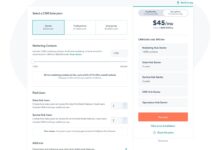
HubSpot CRM Pricing: The Complete Breakdown for 2024

When it comes to customer relationship management (CRM), HubSpot stands out as one of the most popular platforms globally. But understanding HubSpot CRM pricing isn’t as simple as picking a plan and paying a flat fee. The platform operates on a tiered model, with each level offering different tools, integrations, and scalability. Whether you’re a startup or an enterprise, knowing how pricing scales with your needs is crucial.
Free Plan: Is It Really Free?
The HubSpot CRM Free plan is often the first point of entry for small businesses and solopreneurs. It includes core CRM features like contact management, deal tracking, task automation, and email integration. While it’s labeled “free,” there are limitations that could push users toward paid upgrades.
- Limited to 1 million contacts
- No access to advanced reporting
- Basic email tracking only
- No custom dashboards or workflows
Despite these constraints, the free plan remains one of the most robust free CRMs on the market. According to HubSpot’s official pricing page, over 150,000 companies use the free version monthly.
Paid Tiers: Starter, Professional, and Enterprise
HubSpot CRM’s paid plans—Starter, Professional, and Enterprise—are part of broader suites (Sales Hub, Service Hub, Marketing Hub, and Content Hub). The CRM functionality is embedded within these hubs, so pricing depends on which hub and tier you choose.
- Starter Plans: Start at $15/month per user (billed annually)
- Professional Plans: Begin around $800/month for up to 10 users
- Enterprise Plans: Start at approximately $3,200/month
These prices can escalate quickly based on user count, add-ons, and hub combinations. For example, bundling Sales Hub Professional with Marketing Hub Professional can exceed $1,500/month.
“HubSpot doesn’t sell a CRM—you buy into an ecosystem. The real cost isn’t just the monthly fee, but the long-term dependency on their integrated tools.” — CRM Industry Analyst, 2023
HubSpot CRM Pricing by Hub: Sales, Marketing, Service, and Content
To truly understand HubSpot CRM pricing, you must evaluate it within the context of the four main hubs. Each hub enhances the CRM with specialized tools, but they come at a cost.
Sales Hub: Powering Your Pipeline
Sales Hub is where most users interact with the CRM daily. It adds features like email automation, meeting scheduling, call tracking, and deal forecasting. The pricing structure is tiered:
- Free: Basic contact and deal management
- Starter ($15/user/month): Includes sequences, email scheduling, and basic reporting
- Professional ($800/month for 10 users): Adds advanced sequences, playbooks, and custom reporting
- Enterprise ($3,200/month for 10 users): AI-powered insights, territory management, and advanced permissions
One key factor: the Starter plan has a minimum spend of $50/month, meaning even a single user pays $50 if billed monthly. This can be a surprise for solopreneurs expecting $15.
Marketing Hub: From Leads to Conversion
Marketing Hub integrates lead generation tools directly into the CRM. It includes email marketing, landing pages, social media scheduling, and analytics. Pricing tiers mirror Sales Hub but start higher:
- Free: Forms, live chat, and basic tracking
- Starter ($20/user/month, min $200/month): Email campaigns, A/B testing, and ad management
- Professional ($800/month for 10 users): Smart content, lead nurturing, and attribution reporting
- Enterprise ($3,200/month): Advanced personalization, predictive content, and multi-touch attribution
For businesses relying on inbound marketing, the jump from Starter to Professional is often necessary—but costly.
HubSpot CRM Pricing – HubSpot CRM Pricing menjadi aspek penting yang dibahas di sini.
Service Hub: Customer Support Integration
Service Hub connects customer service data to the CRM, enabling ticketing, knowledge bases, and customer feedback. It’s ideal for companies prioritizing post-sale engagement.
- Free: Ticketing system and customer feedback surveys
- Starter ($20/user/month, min $200/month): Live chat, chatbots, and automation
- Professional ($800/month): SLA management, macro suggestions, and reporting
- Enterprise ($3,200/month): AI-powered recommendations and advanced automation
Service Hub is often overlooked in HubSpot CRM pricing discussions, but it’s critical for SaaS and subscription-based businesses.
HubSpot CRM Pricing: Hidden Costs You Need to Know
While the listed prices are transparent, several hidden costs can inflate your bill. These aren’t always obvious during the sales process, but they significantly impact ROI.
Per-User vs. Minimum Billing
HubSpot markets its Starter plans as “per user,” but enforces minimum monthly spends. For example:
- Sales Hub Starter: $15/user/month, but minimum $50/month
- Marketing Hub Starter: $20/user/month, minimum $200/month
- Service Hub Starter: $20/user/month, minimum $200/month
This means a solo marketer pays $200/month even with one user—far above the advertised rate. Always calculate based on minimums, not per-user costs.
Add-Ons and Feature Upgrades
HubSpot offers optional add-ons that enhance functionality but add to the bill:
- CRM Extensions: $25–$50/month for syncing with external tools
- Custom Objects: Available only in Enterprise, but require developer setup
- Advanced Reporting: Locked behind Professional and Enterprise tiers
- AI Tools: Such as content generation and predictive lead scoring, require Enterprise
These features are often essential for scaling businesses, making Enterprise a necessity despite its high cost.
Implementation and Onboarding Fees
While HubSpot provides free onboarding resources, complex migrations or custom workflows may require professional services. Third-party consultants charge $100–$250/hour for setup, training, and integration. Some agencies offer fixed-fee packages ranging from $2,000 to $10,000.
Additionally, HubSpot’s Partner Program includes certified agencies that can assist, but their services are not included in subscription fees.
“We thought we were getting a $800/month CRM. After add-ons, training, and automation setup, our first-year cost was over $15,000.” — SaaS Founder, Anonymous
HubSpot CRM Pricing vs. Competitors: How Does It Stack Up?
To evaluate whether HubSpot CRM pricing is fair, it’s essential to compare it with alternatives like Salesforce, Zoho CRM, and Pipedrive.
Salesforce: The Enterprise Benchmark
Salesforce is HubSpot’s closest competitor in functionality but differs significantly in pricing and complexity.
HubSpot CRM Pricing – HubSpot CRM Pricing menjadi aspek penting yang dibahas di sini.
- Salesforce Essentials: $25/user/month (simpler interface)
- Salesforce Professional: $80/user/month
- Salesforce Enterprise: $165/user/month
- Unlimited: $330/user/month
Unlike HubSpot, Salesforce charges strictly per user with no minimums. However, implementation is more complex and often requires third-party consultants. For a 10-user team, Salesforce Enterprise costs $1,650/month—still less than HubSpot’s bundled Professional plans.
Source: Salesforce Pricing Page
Zoho CRM: The Budget-Friendly Alternative
Zoho CRM is known for affordability and flexibility.
- Free Plan: Up to 3 users
- Standard: $14/user/month
- Professional: $23/user/month
- Enterprise: $40/user/month
Zoho offers similar features to HubSpot’s Starter and Professional plans at a fraction of the cost. However, the user interface is less intuitive, and the ecosystem isn’t as tightly integrated.
For startups, Zoho CRM can save thousands annually. But for companies invested in content marketing and automation, HubSpot’s ecosystem may justify the premium.
Source: Zoho CRM Pricing
Pipedrive: Sales-First Simplicity
Pipedrive focuses exclusively on sales pipeline management.
- Essential: $14.90/user/month
- Advanced: $29.90/user/month
- Professional: $49.90/user/month
- Enterprise: $99.90/user/month
Pipedrive’s pricing is straightforward and scales linearly. It lacks HubSpot’s marketing and service tools, but for sales-heavy teams, it’s more cost-effective. The Enterprise plan is still less than half the cost of HubSpot’s equivalent.
Source: Pipedrive Pricing
HubSpot CRM Pricing for Small Businesses: Is It Worth It?
Small businesses often face a dilemma: invest in a powerful CRM early or start with cheaper tools and migrate later. HubSpot’s free plan makes it accessible, but growth often demands paid upgrades.
When the Free Plan Suffices
For solopreneurs, freelancers, or micro-businesses with simple sales processes, the free plan is more than adequate. It includes:
HubSpot CRM Pricing – HubSpot CRM Pricing menjadi aspek penting yang dibahas di sini.
- Contact and company management
- Deal and task tracking
- Email integration with Gmail and Outlook
- Meeting scheduling via HubSpot Meetings
- Basic reporting and dashboard
If your business doesn’t require automation, advanced analytics, or team collaboration, the free plan can remain sufficient for years.
When to Upgrade to Paid Plans
Consider upgrading when you experience any of the following:
- Need for automated email sequences
- Team collaboration with shared pipelines
- Desire for custom reporting and dashboards
- Integration with advertising platforms (e.g., Facebook, Google Ads)
- Requirement for SLA tracking in customer service
The jump from free to Starter is often justified, but the cost-benefit analysis becomes trickier at the Professional level.
Cost-Benefit Analysis: ROI of HubSpot CRM
A 2023 study by G2 found that 78% of small businesses using HubSpot reported a positive ROI within 12 months. Key drivers included:
- 30% increase in lead conversion rates
- 25% reduction in manual data entry
- 40% faster onboarding for new sales reps
However, ROI diminishes if the full suite isn’t utilized. Many businesses pay for Marketing Hub features they never use.
HubSpot CRM Pricing for Enterprises: Scalability and Customization
For large organizations, HubSpot CRM pricing shifts from a cost discussion to a strategic investment. Enterprises need scalability, security, and deep customization.
Enterprise Features That Justify the Cost
HubSpot’s Enterprise tier unlocks capabilities essential for large teams:
- Advanced Permissions: Granular control over user access
- Custom Objects: Create unique data models (e.g., projects, contracts)
- AI-Powered Insights: Predictive lead scoring and content recommendations
- Dedicated Support: 24/7 access to technical account managers
- SLA Guarantees: Uptime and response time commitments
These features reduce operational risk and improve data governance—critical for compliance-heavy industries.
Integration and API Costs
Enterprises often require deep integrations with ERP, HRIS, or legacy systems. HubSpot offers robust APIs, but custom development isn’t free.
- API calls are unlimited, but development labor is not
- Middleware tools like Zapier or Make cost extra
- Custom dashboard development requires front-end resources
While HubSpot doesn’t charge for API access, the total cost of integration can exceed $20,000 for complex deployments.
Total Cost of Ownership (TCO) Analysis
A 2024 TCO analysis by Forrester found that over a 3-year period, HubSpot Enterprise costs an average of $120,000 for a 50-user organization. This includes:
HubSpot CRM Pricing – HubSpot CRM Pricing menjadi aspek penting yang dibahas di sini.
- Subscription fees: $96,000
- Implementation: $12,000
- Training and change management: $8,000
- Maintenance and support: $4,000
Compared to Salesforce, which averaged $145,000 for the same scope, HubSpot was 17% cheaper. However, Zoho CRM came in at just $48,000, highlighting the premium HubSpot commands for user experience and ecosystem cohesion.
How to Optimize HubSpot CRM Pricing for Your Business
Regardless of size, you can reduce costs and maximize value with strategic planning.
Start Free, Then Scale Gradually
Begin with the free CRM and only upgrade when specific features are needed. Avoid bundling hubs prematurely. For example, use free Marketing Hub tools before committing to a paid plan.
Bundle Hubs Strategically
HubSpot offers discounts when purchasing multiple hubs. For instance, buying Sales and Marketing Hub together can save 10–15% compared to standalone plans. Negotiate with sales reps for custom bundles.
Negotiate with HubSpot Sales
While pricing is listed online, HubSpot is open to negotiation—especially for annual commitments or large teams. Businesses with 50+ users can often secure 10–20% discounts. Ask about:
- Annual vs. monthly billing savings
- Non-profit or startup discounts
- Legacy customer loyalty programs
“We saved $8,000 in our first year by negotiating a custom bundle and paying annually.” — Marketing Director, Mid-Sized Tech Firm
Future Trends in HubSpot CRM Pricing (2024 and Beyond)
The CRM landscape is evolving, and HubSpot is adapting its pricing to stay competitive.
AI and Automation: The Next Cost Driver
HubSpot is investing heavily in AI, including generative content tools and predictive analytics. These features are currently in Enterprise, but may trickle down—potentially creating new mid-tier plans focused on AI.
Potential for Usage-Based Pricing
Currently, HubSpot uses user-based pricing. However, competitors like Salesforce are experimenting with usage-based models (e.g., per email sent, per automation run). HubSpot may follow, especially for Marketing Hub.
Expansion into Vertical-Specific Solutions
HubSpot is developing industry-specific templates and workflows. These could be offered as premium add-ons, creating new revenue streams and pricing tiers tailored to healthcare, real estate, or education.
Is HubSpot CRM worth the price?
Yes—if you fully utilize its ecosystem. The platform excels at integrating sales, marketing, and service data into a unified system. But if you only need basic CRM functionality, cheaper alternatives exist.
HubSpot CRM Pricing – HubSpot CRM Pricing menjadi aspek penting yang dibahas di sini.
Can you negotiate HubSpot CRM pricing?
Absolutely. While public pricing is fixed, HubSpot sales teams can offer discounts for annual billing, multi-hub purchases, or large user counts. Always ask.
Does HubSpot offer a free trial?
The free CRM plan is a permanent free trial. For paid features, HubSpot offers 14-day trials of Professional and Enterprise tiers upon request.
What happens if you exceed contact limits?
You’ll be prompted to upgrade. HubSpot doesn’t delete data, but restricts access to new features until you move to a higher tier.
Are there cancellation fees?
No. HubSpot allows you to downgrade or cancel anytime. However, annual contracts require payment for the full term unless otherwise negotiated.
In conclusion, HubSpot CRM pricing is transparent but complex. The free plan is exceptional for startups, while paid tiers offer powerful tools at a premium. Hidden costs like minimum billing and add-ons can surprise new users. Compared to competitors, HubSpot is more expensive than Zoho or Pipedrive but offers superior integration and UX. For businesses committed to inbound marketing and automation, the investment often pays off. For others, a leaner CRM might be smarter. The key is to align your plan with actual needs—not just aspirations.
HubSpot CRM Pricing – HubSpot CRM Pricing menjadi aspek penting yang dibahas di sini.
Further Reading:
