Choosing the right CRM system can transform your business—but navigating CRM system pricing? That’s where things get tricky. With plans ranging from free to thousands per month, understanding the real costs behind the labels is essential for smart decision-making in 2024.
Understanding CRM System Pricing: What You’re Really Paying For

CRM system pricing isn’t just about how much you pay per user per month. It’s a complex web of features, scalability, integration capabilities, and long-term value. Many businesses fall into the trap of focusing solely on the sticker price, only to be blindsided by hidden fees, add-ons, and upgrade costs down the line.
Base Subscription vs. Total Cost of Ownership
The advertised price of a CRM often reflects only the base subscription cost. However, the total cost of ownership (TCO) includes implementation, training, customization, data migration, integrations, and ongoing support. For example, a CRM priced at $20/user/month might end up costing $50/user/month when you factor in third-party connectors, onboarding consultants, and internal training hours.
- Base subscription: The starting price per user per month.
- Implementation fees: One-time setup costs, especially for enterprise solutions.
- Ongoing support and maintenance: Often overlooked but critical for long-term success.
“The cheapest CRM isn’t always the most cost-effective. You’re not just buying software—you’re investing in customer relationships.” — Gartner Research, 2023
How CRM Tiering Affects Pricing
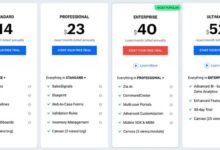
Most CRM vendors use a tiered pricing model, offering different levels of functionality at increasing price points. These tiers—often labeled as ‘Starter,’ ‘Professional,’ and ‘Enterprise’—dictate access to features like automation, reporting, API access, and multi-channel support.
For instance, Salesforce Sales Cloud starts at $25/user/month for the Essentials plan but jumps to $165/user/month for the Unlimited edition. The difference? Advanced analytics, workflow automation, and 24/7 support. Understanding what each tier offers is crucial to avoiding overpaying—or under-equipping—your team.
CRM System Pricing Models: Subscription, Perpetual, and Hybrid
Not all CRM pricing follows the same model. The structure of how you pay can significantly impact your budget and flexibility. The three primary models are subscription-based, perpetual licensing, and hybrid approaches.
Subscription-Based CRM Pricing
This is the most common model today, especially with cloud-based CRMs like HubSpot, Zoho, and Microsoft Dynamics 365. You pay a recurring fee—usually monthly or annually—based on the number of users and features.
- Pros: Predictable costs, automatic updates, scalable.
- Cons: Long-term costs can exceed perpetual licenses; vendor lock-in risk.
- Best for: SMBs and growing businesses needing flexibility.
For example, Zoho CRM offers a free plan for up to 3 users and scales to $52/user/month for the Enterprise plan, making it highly accessible for startups.
Perpetual Licensing Model
In this model, you pay a one-time fee to own the software outright. This was common with on-premise CRMs like Microsoft Dynamics CRM (before it shifted to cloud). While you avoid recurring fees, you’re responsible for hosting, maintenance, and upgrades.
CRM System Pricing – CRM System Pricing menjadi aspek penting yang dibahas di sini.
Perpetual licenses can cost anywhere from $1,000 to $5,000 per user upfront. When combined with server infrastructure and IT staff, the initial investment is high, but long-term costs may be lower for stable, large organizations.
“Perpetual licensing gives control but demands responsibility. You’re not just buying software—you’re running a software operation.” — TechTarget, 2022
Hybrid CRM Pricing Models
Some vendors offer hybrid models, combining a one-time license with annual maintenance fees (typically 15-20% of the license cost). This model is rare but still used by niche enterprise CRMs that offer both on-premise and cloud deployment.
For example, SAP CRM allows organizations to license the software and pay annual fees for updates and support. This model suits large enterprises with strict data governance policies and existing IT infrastructure.
Key Factors That Influence CRM System Pricing
CRM system pricing isn’t arbitrary. Multiple factors determine how much you’ll pay, and understanding them helps you negotiate better deals and avoid unnecessary expenses.
User-Based vs. Feature-Based Pricing
Most CRMs charge per user, but some also use feature-based pricing. User-based models are straightforward: more users = higher cost. Feature-based models charge extra for advanced tools like AI-powered insights, telephony integration, or marketing automation.
For example, HubSpot CRM offers a free core CRM but charges for its marketing hub, sales hub, and service hub as separate add-ons. This allows businesses to pay only for what they use but can lead to bill creep if not monitored.
Deployment Method: Cloud vs. On-Premise
Cloud-based CRMs dominate the market due to their ease of deployment and lower upfront costs. On-premise solutions require hardware, IT staff, and security compliance, increasing the total cost.
- Cloud CRM: Lower initial cost, faster deployment, vendor-managed updates.
- On-Premise CRM: Higher control, better for data-sensitive industries, but costly to maintain.
According to a 2023 Forrester report, 87% of new CRM implementations are cloud-based, reflecting the shift toward agility and remote work compatibility.
Integration and API Costs
One of the biggest hidden costs in CRM system pricing is integration. Connecting your CRM to email, marketing tools, ERP systems, or e-commerce platforms often requires API access, middleware, or third-party connectors—many of which are not included in base plans.
CRM System Pricing – CRM System Pricing menjadi aspek penting yang dibahas di sini.
For example, Salesforce charges extra for API calls beyond a certain limit. Zapier, a popular integration tool, may be needed to bridge gaps, adding $20–$100/month to your bill. Always ask vendors about API limits and integration costs before committing.
Top CRM Platforms and Their Pricing Breakdown in 2024
To make informed decisions, let’s compare the leading CRM platforms and their CRM system pricing structures. This section breaks down costs, features, and value propositions to help you identify the best fit for your budget and needs.
Salesforce: The Enterprise Leader
Salesforce remains the gold standard for enterprise CRM, offering unmatched scalability and customization. However, its CRM system pricing reflects its premium positioning.
- Essentials: $25/user/month – Basic sales automation for small teams.
- Professional: $80/user/month – Full sales and marketing automation.
- Enterprise: $165/user/month – Advanced customization, API access, and analytics.
- Unlimited: $330/user/month – 24/7 support, sandbox environments, and priority service.
Additional costs include Einstein AI ($50+/user/month), Service Cloud ($75+/user/month), and implementation services that can run $10,000+ for mid-sized businesses. Learn more at Salesforce Pricing Page.
HubSpot CRM: Best for Startups and SMBs
HubSpot stands out for its generous free plan and intuitive interface. Its CRM system pricing is transparent and modular, allowing businesses to scale features as needed.
- Free CRM: Unlimited users, contact management, email tracking.
- Starter: $45/month – Basic sales and marketing tools.
- Professional: $450/month (billed annually) – Advanced automation, reporting, and ad management.
- Enterprise: $1,200/month – Predictive lead scoring, custom behavioral tracking.
While the free tier is powerful, advanced features like sequences and reporting require upgrades. HubSpot’s ecosystem encourages bundling tools, which can increase costs over time.
Microsoft Dynamics 365: Deep Integration with Office 365
Microsoft Dynamics 365 is ideal for organizations already using Microsoft 365. Its CRM system pricing is competitive, especially for businesses seeking seamless integration with Outlook, Teams, and Excel.
- Sales Professional: $65/user/month – Lead and opportunity management.
- Customer Service: $95/user/month – Case management and knowledge base.
- Marketing: $2,000/month (1,000 contacts) – Email campaigns and event management.
- Enterprise Plan: Custom pricing for large deployments.
Dynamics 365 also offers a unified interface across sales, service, and marketing, reducing training time. Implementation, however, can be complex and may require Microsoft partners, adding to costs.
Hidden Costs in CRM System Pricing You Can’t Ignore
The advertised price is just the tip of the iceberg. Many businesses underestimate CRM system pricing because they overlook hidden costs that accumulate over time.
CRM System Pricing – CRM System Pricing menjadi aspek penting yang dibahas di sini.
Implementation and Onboarding Fees
Implementing a CRM isn’t plug-and-play. Data migration, user training, workflow setup, and system configuration require time and expertise. Vendors like Salesforce and Oracle charge $100–$200/hour for professional services, with onboarding costs ranging from $5,000 to $50,000 depending on complexity.
Even with self-service platforms like Zoho, businesses often hire consultants to ensure clean data import and automation setup, adding thousands to the initial investment.
Customization and Development Costs
Off-the-shelf CRM features rarely fit every business perfectly. Custom fields, workflows, dashboards, and integrations often require development work. Salesforce, for example, uses Apex and Lightning components, which require certified developers.
Hiring a freelance Salesforce developer can cost $100–$150/hour. Over time, even minor customizations can add up to tens of thousands in expenses.
Renewal and Contract Lock-In Risks
Many vendors offer discounted first-year rates to attract customers, only to increase prices at renewal. Some lock users into 12- or 24-month contracts with early termination fees.
Always read the fine print. Ask about price guarantees, renewal terms, and data export options. A CRM that’s affordable today could become a financial burden in year two.
How to Choose the Right CRM Based on Pricing and Value
Price alone shouldn’t dictate your CRM choice. The real question is: what value does the CRM deliver relative to its cost?
Align CRM Features with Business Goals
Start by identifying your core needs: Are you focused on sales automation, customer support, marketing campaigns, or all three? A $30/user/month CRM with poor reporting won’t help a data-driven sales team, while a $200/user/month enterprise suite is overkill for a 5-person startup.
Map your business processes to CRM capabilities. If your team spends hours manually logging calls, prioritize CRMs with built-in telephony and call tracking. If lead nurturing is key, look for marketing automation features.
CRM System Pricing – CRM System Pricing menjadi aspek penting yang dibahas di sini.
Calculate ROI Before Committing
Estimate the return on investment (ROI) by projecting time savings, increased conversion rates, and improved customer retention. For example, if a CRM saves each sales rep 5 hours per week and you have 10 reps earning $50/hour, that’s $25,000 in monthly productivity gains.
Compare this to the CRM’s monthly cost. If the CRM costs $3,000/month, the ROI is clear. Use tools like Nucleus Research’s CRM ROI Calculator to model financial impact.
Negotiate and Leverage Competing Quotes
CRM vendors expect negotiation. Don’t accept the listed price. Use competing quotes from HubSpot, Zoho, or Pipedrive to leverage better terms. Ask for:
- Discounted annual billing (often 10–20% off monthly).
- Free training or onboarding credits.
- Extended trials or pilot programs.
- Price matching or multi-year discounts.
Enterprise clients can often secure custom pricing, especially when committing to long-term contracts or bundling multiple products.
Future Trends in CRM System Pricing (2024 and Beyond)
The CRM landscape is evolving rapidly, and pricing models are adapting to new technologies and user expectations.
Rise of AI-Powered Features and Their Cost Impact
AI is no longer a luxury—it’s becoming a standard in CRM platforms. Features like predictive lead scoring, chatbot assistants, and sentiment analysis are now common, but they come at a premium.
Salesforce Einstein, HubSpot’s AI content tools, and Zoho Zia all add $20–$100/user/month to base plans. As AI becomes more embedded, expect vendors to bundle it into higher tiers or charge separately for advanced capabilities.
Shift Toward Usage-Based and Outcome-Based Pricing
Some vendors are experimenting with usage-based pricing—charging based on the number of emails sent, API calls made, or leads processed. Others are exploring outcome-based models, where pricing ties to performance metrics like conversion rates or customer lifetime value.
While still rare, these models could disrupt traditional per-user pricing, especially for businesses with fluctuating workloads or seasonal sales cycles.
CRM System Pricing – CRM System Pricing menjadi aspek penting yang dibahas di sini.
Increased Transparency and Price Wars Among Vendors
As competition intensifies, CRM vendors are under pressure to simplify pricing and reduce hidden fees. HubSpot and Zoho have led the charge with transparent, no-hidden-cost models, forcing larger players like Salesforce to improve their pricing clarity.
Expect more vendors to offer free tiers, flat-rate plans, and open API access to attract cost-conscious SMBs and startups.
Free vs. Paid CRM: Is Free Really Free?
Many CRMs offer free versions, but are they truly free? Let’s dissect the reality behind free CRM system pricing.
Limitations of Free CRM Plans
Free CRMs like HubSpot, Zoho, and Freshsales are powerful for small teams but come with limitations:
- User caps (e.g., HubSpot allows unlimited users, but Zoho limits to 3).
- Feature restrictions (no automation, limited reporting).
- Branding (vendor logos on emails or portals).
- Storage limits and reduced API access.
These limitations make free plans unsuitable for scaling businesses or those requiring advanced functionality.
When to Upgrade from Free to Paid
Consider upgrading when:
- You need automation to reduce manual work.
- Your team exceeds the user limit.
- You require integration with other tools (e.g., Slack, Shopify).
- You want custom reporting or dashboards.
The upgrade cost is often justified by time savings and improved efficiency. A $50/month plan that saves 10 hours of admin work weekly is a smart investment.
The Hidden Cost of Free: Data Ownership and Vendor Lock-In
Some free CRMs restrict data export or charge for bulk data migration. Others use your usage data to train AI models or upsell premium services. Always review the terms of service to ensure you retain full ownership of your customer data.
Vendor lock-in is another risk. Once your team is trained and data is imported, switching CRMs becomes costly and time-consuming. Start with a platform that can grow with you.
CRM System Pricing – CRM System Pricing menjadi aspek penting yang dibahas di sini.
What is the average cost of a CRM system?
The average cost of a CRM system ranges from $12 to $250 per user per month. Entry-level CRMs like Zoho or Freshsales start at $12–$15/user/month, while enterprise solutions like Salesforce can exceed $300/user/month. Many vendors also offer free plans with limited features.
Are there any truly free CRM systems?
Yes, several CRM systems offer free plans, including HubSpot CRM, Zoho CRM, and Freshsales. However, these plans typically come with limitations on users, features, and storage. They are ideal for startups and small teams but may require upgrades as your business grows.
What factors increase CRM system pricing?
Key factors that increase CRM system pricing include the number of users, advanced features (like AI or automation), integration requirements, deployment method (cloud vs. on-premise), and customization needs. Hidden costs like implementation, training, and support also add to the total expense.
How can I reduce CRM costs without sacrificing quality?
You can reduce CRM costs by starting with a free or low-cost plan, negotiating annual billing discounts, leveraging open-source alternatives, using built-in integrations instead of third-party tools, and training your team to maximize existing features. Avoid overbuying features you don’t need.
Is it better to pay monthly or annually for a CRM?
CRM System Pricing – CRM System Pricing menjadi aspek penting yang dibahas di sini.
Paying annually is usually more cost-effective, as most vendors offer 10–20% discounts for annual commitments. However, monthly billing provides flexibility to cancel or change plans if your needs evolve. Choose based on your confidence in long-term usage.
Understanding CRM system pricing is about more than just comparing price tags. It’s about evaluating total value, anticipating hidden costs, and choosing a solution that aligns with your business goals. Whether you’re a startup on a budget or an enterprise needing robust functionality, the right CRM can drive growth—but only if you navigate the pricing landscape wisely. Take the time to research, test, and negotiate. Your bottom line will thank you.
Further Reading:
